Do You Need a Permit for a Patio Cover in San Antonio?
Inside city limits, usually yes. The City of San Antonio requires a permit once a covered roof is larger than 300 square feet, and most covered patios we build cross that line. In the BuildSA portal, choose the “Covered Patio or Covered Porch” permit type. Choose that or “Deck,” not both, so you do not end up paying for two permits.
A few more points to know:
- Fans, lights, outlets and gas lines each need their own trade permit and inspection.
- Boerne, Helotes, New Braunfels and other suburbs run their own permit offices with their own rules.
- HOA approval is a separate step, and we get it in writing before work starts.
Our team prepares the drawings, files the permit and HOA package, and schedules the inspections. Read the details in our San Antonio patio cover permit guide.
Aluminum vs Wood Patio Covers: Which Is Better in San Antonio?
Both materials work. They just ask different things of you over the years.
- Aluminum: will not warp, crack or draw termites, and stands up to hard sun and heavy rain. An occasional wash is about all the care it needs. It costs more at the start and less over time.
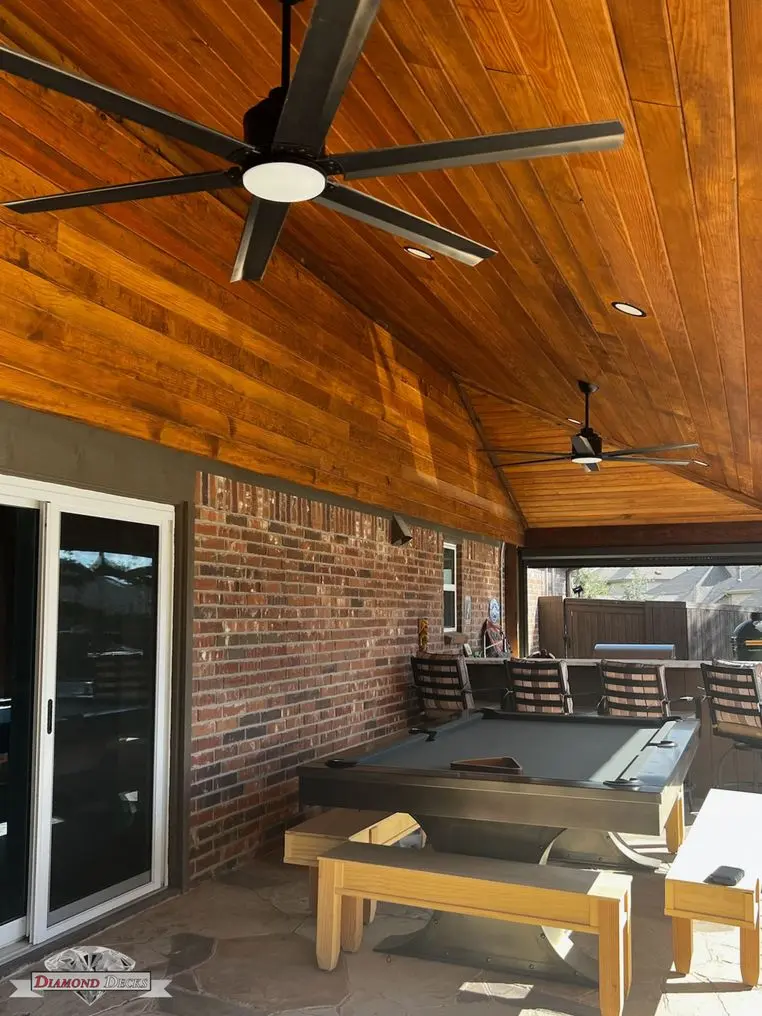
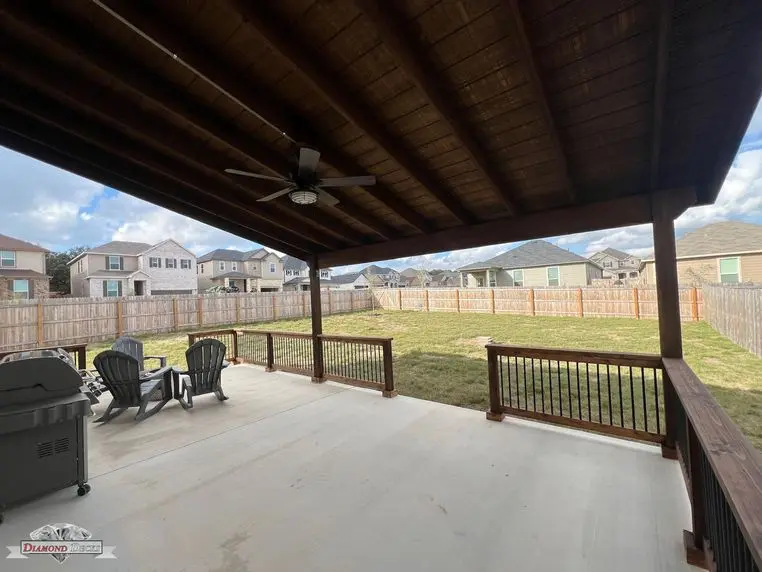
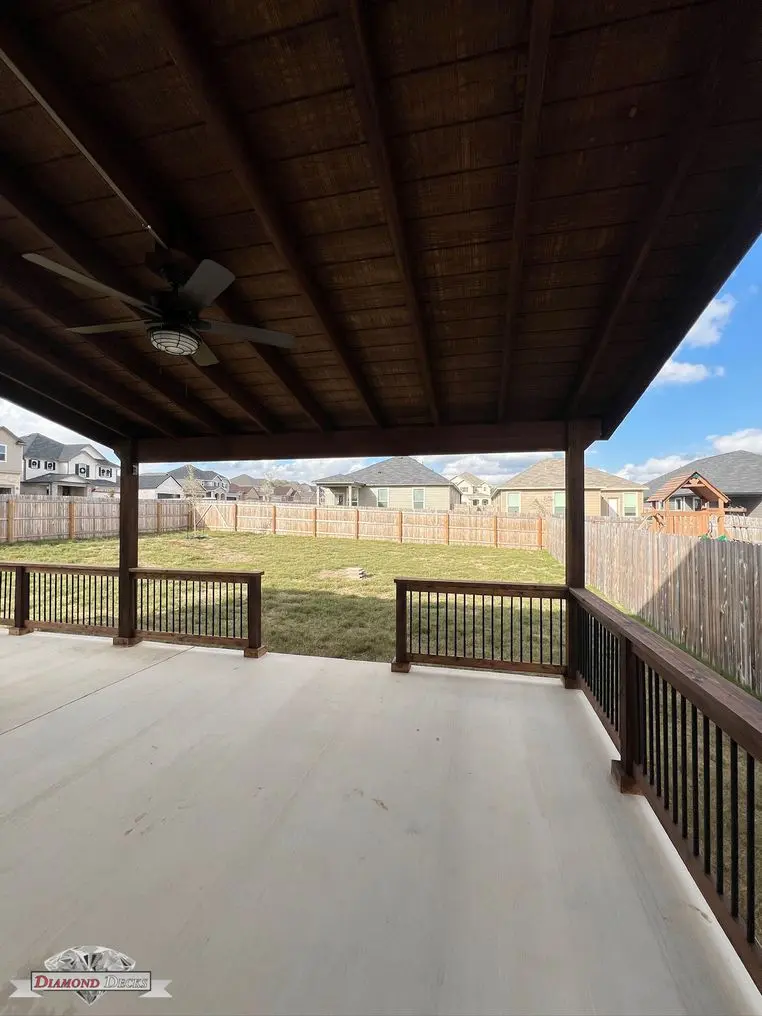
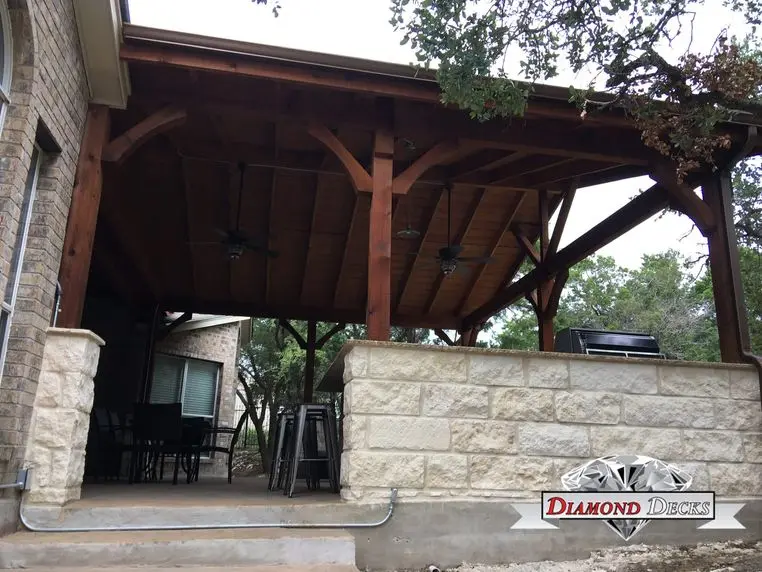
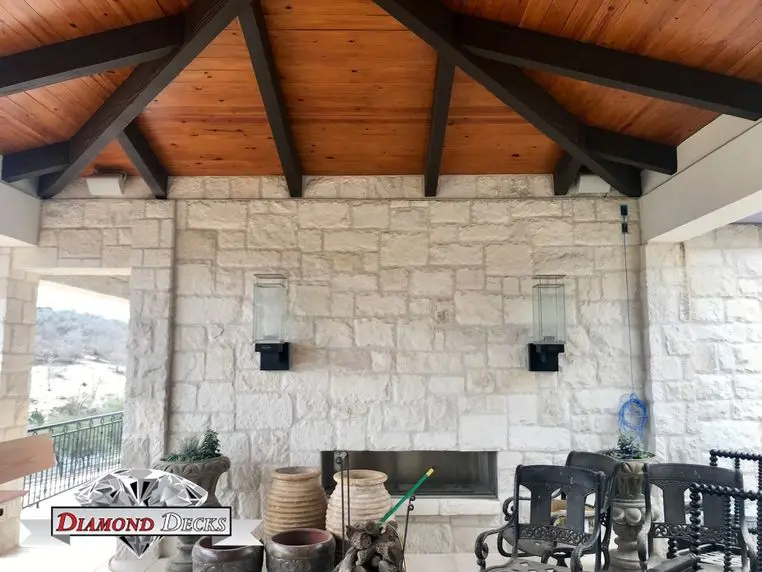
- Wood: warm and classic, and it can be stained or painted any color. It costs less on day one, but sun and rain can warp, crack or rot it, so it needs sealing, staining and the odd board replaced.
Style plays a part too. Aluminum tends to suit sleek, newer homes, while wood fits more traditional designs. Aluminum also comes in woodgrain finishes if you want the look of wood without the upkeep. Compare them side by side in our aluminum vs wood patio cover comparison.
Attached or Freestanding Patio Cover: Which Layout Fits Your Yard?
Our aluminum covers come in five core layouts, which lets us put posts where they suit you and keep them out of your sight lines:
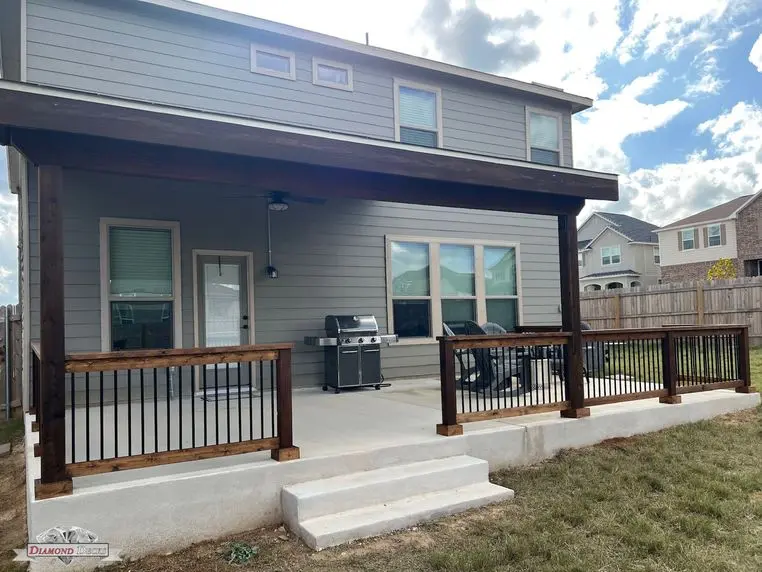
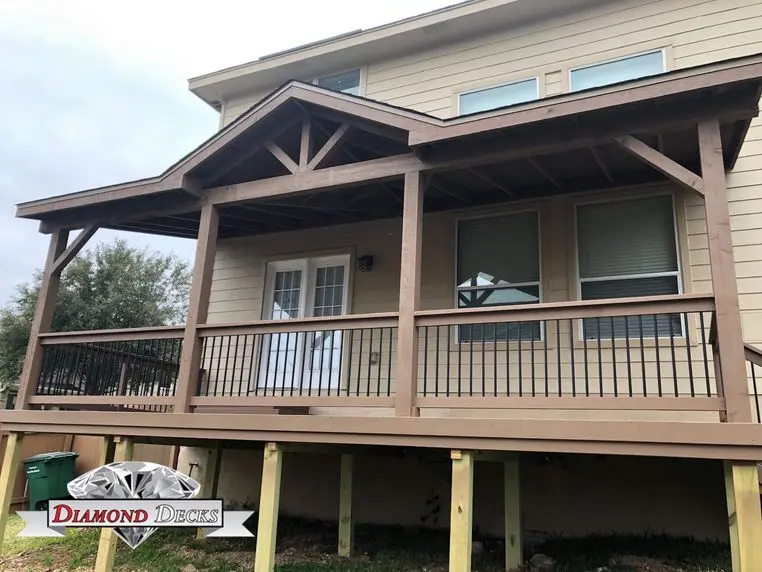
- Host attached: mounts to the house, including options with no posts.
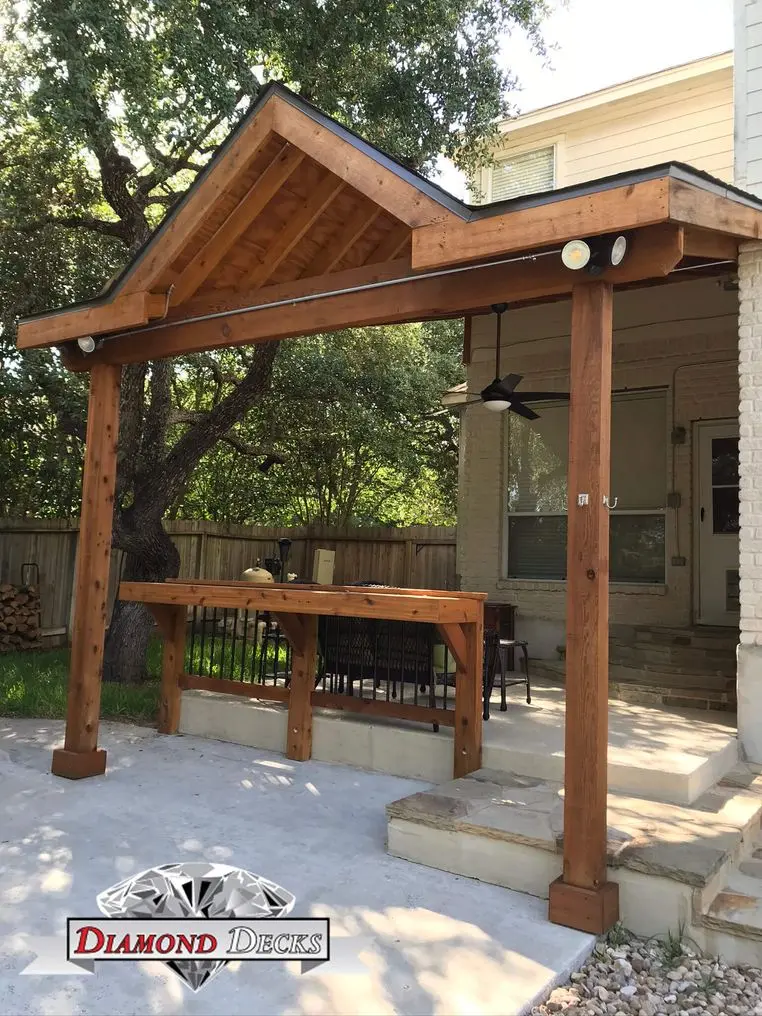
- Freestanding: shade anywhere on the lot, such as by the pool, the garden or an outdoor kitchen.
- Single cantilever: posts on one side only for open sight lines.
- Double cantilever: open on two sides, used when the cover runs longer than 14 feet.
- Triple post cantilever: the cantilever look on a cover wider than 16 feet.
Attached covers are designed to match the roofline and style of your home. See photos of each layout on our aluminum patio covers in San Antonio page.
Patio Cover Roof Options: Insulated, Lattice or Louvered
The roof decides how much sun and rain gets through. Our aluminum lineup offers three choices:
- Insulated roof panels: full coverage overhead, finished underneath with a Natural Oak or Spanish Cedar woodgrain look, for cooler shade and a quieter space in the rain.
- Lattice roof: filtered light with a pergola feel. Color choices are Spanish Cedar, Beechwood, Bronze and Graphite Black.
- Louvered systems: slatted tops that balance shade and airflow.
Frames come in Graphite Black, Bronze or Classic White, in a Box Frame profile with solid fascia or an Open Frame profile with exposed beams. You can add privacy walls in 75/25 or 50/50 plank spacing, or solid panels that also block wind and hold a TV. Browse the finishes on our aluminum patio cover options page.
Patio Cover or Pergola: Which Do You Need?
Start with the question of rain. A pergola has an open top of slats or lattice. It filters sunlight but does not keep furniture dry. A patio cover has a solid roof, so it blocks the sun all day, keeps the seating dry in a storm, and can carry fans, lights, a TV and an outdoor kitchen.
- Pick a pergola for dappled light, an open sky feel and a lower price on a comparable footprint.
- Pick a patio cover for daily use all summer, with furniture that can stay out twelve months a year.
The tradeoff with a cover is that it is the larger investment and changes the light in nearby rooms more. Many homeowners do both, pairing a solid roof over the seating with an open pergola section above the grill or spa. See the full comparison in our pergola vs patio cover guide.
Adding Fans, Lights and a TV Under a Patio Cover
A solid roof is the natural place for ceiling fans, recessed lighting, outlets and a TV. The time to plan them is before the build starts. We run the wiring while the cover goes up, which is cleaner and costs less than adding it after the ceiling is finished.
Two things to expect on paper:
- Electrical work needs a separate trade permit, pulled by a state licensed trade contractor registered with the City.
- A gas line for a grill or a heater brings its own permit and inspection as well.
We plan this trade work alongside the cover so the inspections line up with the rest of the job. Our guide to keeping a San Antonio patio usable all winter explains why wiring during the build saves money.
Can a Patio Cover Make Your Patio Usable All Year?
San Antonio winters are short and mild. The National Weather Service normals cited on our site put the January high at 63 degrees and the low at 41. Summer is the harder season, with roughly 122 days each year that reach 90 degrees or more.
A cover handles both. It shades you in August and keeps you dry during a cold rain. To stretch the season further:
- Retractable screens drop when a cold front blows in and roll away on nice days.
- Mounted heaters warm the people under a cover with no fire to tend.
- Solid privacy wall panels block wind on the side where fronts hit.
A cover also keeps sun and rain off your outdoor furniture so it lasts longer, as our post on the biggest benefits of installing patio covers explains. For cold weather upgrades, read our winter patio guide.
Questions to Ask a Patio Cover Contractor Before You Hire
A short interview tells you a lot about a contractor. Our checklist covers nine questions, including these:
- Experience: what similar covers have they built?
- Permits: will they handle the permits, or leave that to you?
- Insurance and workers comp: who pays if something is damaged or someone is hurt on your property?
- Timeline: how long will it take, and what happens if it runs late?
- Time and materials: will you owe more if the job runs long or prices rise?
- Payment schedule: be wary of anyone who wants the full amount before the work is done.
Also ask for reviews and photos of finished projects. Read every question in our patio cover contractor checklist.