What Is the Best Patio Material for a San Antonio Backyard?
For a patio that sits at ground level, our own guide points most homeowners to stamped concrete or pavers. Both stand up to triple digit summer days, hard rain and the clay under most local yards, and neither asks for much weekend work.
- Stamped concrete: one continuous surface, a good match for an outdoor kitchen or fire feature.
- Pavers: the easiest to repair later, since one unit can be swapped on its own.
- Outdoor tile: best under a roof, and only in a textured finish that grips when wet.
- Artificial turf: gets too hot for bare feet in full sun, so we keep it in shaded zones.
The comparison table, with lifespans and upkeep for each surface, is in our San Antonio patio flooring comparison.
Pavers vs Concrete Patio: Cost per Square Foot and Lifespan
Poured concrete is the lower cost option. Installed, a concrete patio runs $6 to $12 per square foot. Paver patios range from $8 to $25 per square foot, also installed, and fancier pavers can reach $50 per square foot. Put another way, pavers tend to cost 25% to 50% more than a plain slab.
What you get for that extra money is lifespan and easy repair. Pavers can last up to 50 years, while concrete left out in the weather usually lasts 20 to 25 years. A cracked paver comes out alone. A slab can crack when the ground shifts, and colored concrete fades unless it is sealed from time to time. You can also mix the two in different parts of the yard. Read the full breakdown in our pavers vs concrete patio comparison.
Stamped Concrete Patio Patterns and Colors for San Antonio Homes
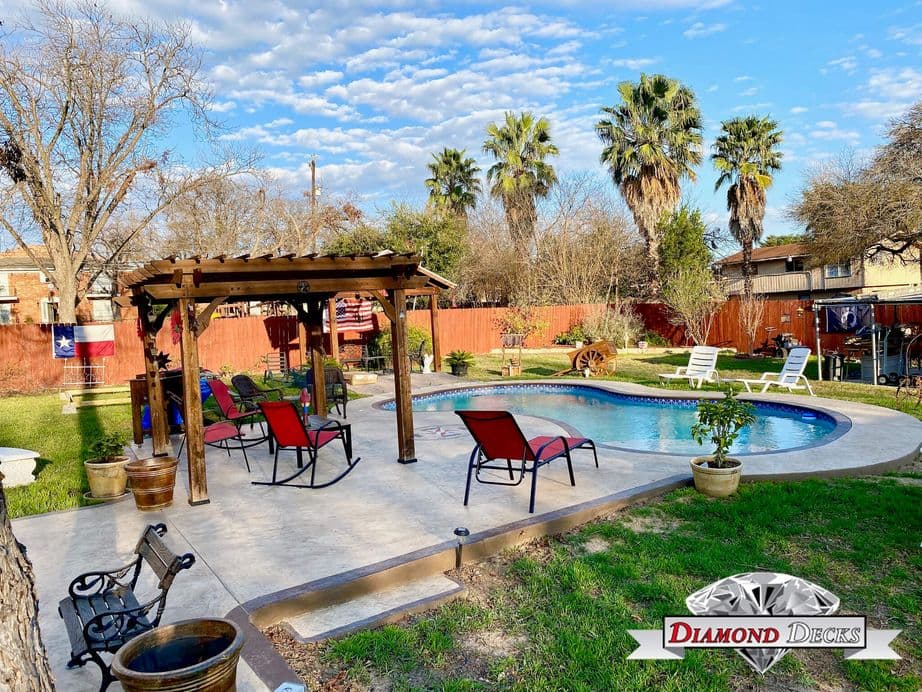
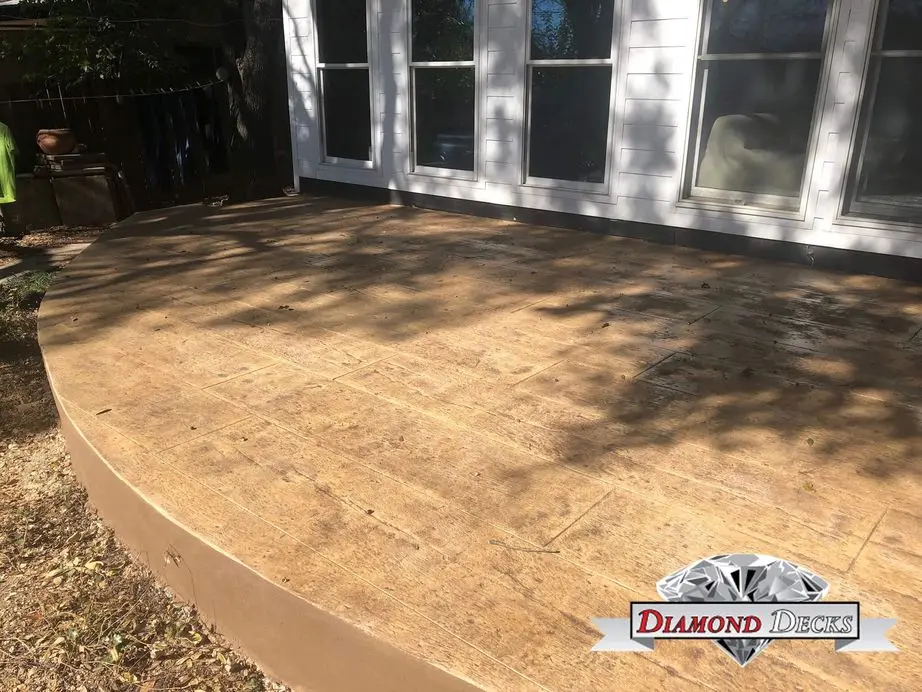
Stamped concrete begins as a normal pour. While it cures, the crew presses pattern molds into the surface and works in a base color plus accent tones, so the finish reads like real stone.
A few pairings that suit homes around town:
- Ashlar slate or random stone in warm buff, sand or limestone tones next to stone and stucco houses.
- Cooler grays alongside modern builds.
- Borders and contrasting bands to give a plain rectangle a custom edge.
- Brick or cobblestone with an anti slip sealer beside a pool.
Bring a photo of the front of your house to the consultation and we can match a pattern to it. See more in our stamped concrete patterns and colors guide and on our stamped concrete contractors page.
How Do You Build a Patio That Lasts on San Antonio Clay?
Local clay swells when wet and shrinks when dry. A patio set on a weak base shows that movement as cracks. Three things guide every patio we design here: where the sun falls, how storm water will leave, and what the soil will do.
For a stamped concrete patio, the build looks like this:
- Excavate, then install and compact a base inside the edge forms.
- Pour a reinforced slab, typically between 4 and 6 inches thick.
- Place expansion joints every 8 to 12 feet so the slab can move without cracking.
- Finish with two coats of UV resistant sealer to hold the color.
Learn how we plan for local weather in our post on custom patio design for Texas weather, and see each step on our stamped concrete installation page.
How Long Does Patio Installation Take in San Antonio?
The surface itself goes in fast. Most stamped concrete patios take 3 to 5 days from pour to final seal. Interlocking pavers take about 2 to 4 days to lay.
The full project runs longer because of prep and paperwork. Our patio builders guide lays out a typical schedule:
- Weeks 1 to 2: site prep, grading and the permit application.
- Weeks 3 to 4: materials arrive, forms go up and the base goes down.
- Weeks 5 to 6: the concrete is poured, the pavers are set or the decking goes on.
- Weeks 7 to 8: final sealing, finishing touches, a walkthrough and final inspection.
Weather and permit office turnaround can move these dates. The full timeline is in our guide on patio design, build and cost for San Antonio homeowners.
How Do You Clean and Maintain Patio Pavers?
Paver care in San Antonio comes down to a few steady habits:
- Sweep once a week so grit does not grind the surface or feed joint weeds.
- Wash with mild dish soap and water. Skip acid washes and bleach heavy products, which can pull out color and eat the sealer.
- Fill the joints with polymeric sand, which hardens and stays put in a downpour.
- Reseal when a little water on a clean paver soaks in instead of beading.
- Pressure wash only on low pressure with a fan tip, then sand the joints again.
Spring is the time for a deep wash and the water test, and fall means clearing leaves weekly so tannins do not stain. Get the season by season routine in our paver cleaning and maintenance guide.
What Should a Patio Builder’s Estimate Include?
Once a builder has walked your yard, read the estimate line by line before you sign. A solid one spells out:
- Start and finish dates.
- Payment terms.
- The cost of materials and the cost of labor.
- Any permits the job requires.
Ask what warranty covers the workmanship and the materials, and look through the builder’s photo gallery to see if their style fits yours. It also helps to have a rough budget in mind. That saves time on both sides, and a good builder can tell you what that budget will build. If a line on the estimate or the scope is unclear, ask about it before you sign anything. More tips are in our guide to hiring patio builders.
How Can You Keep a Patio Cool in a Texas Summer?
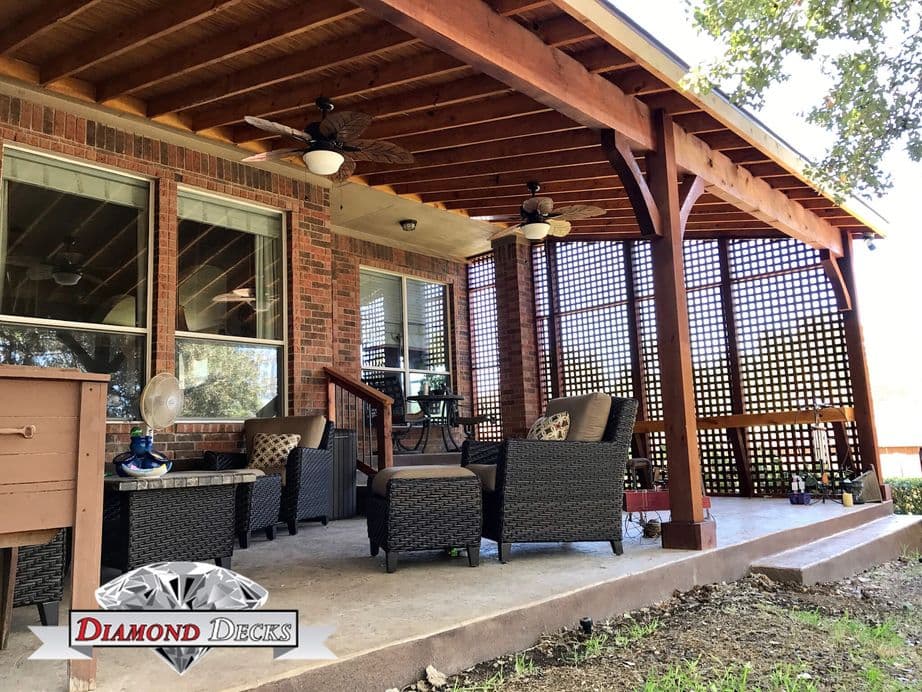
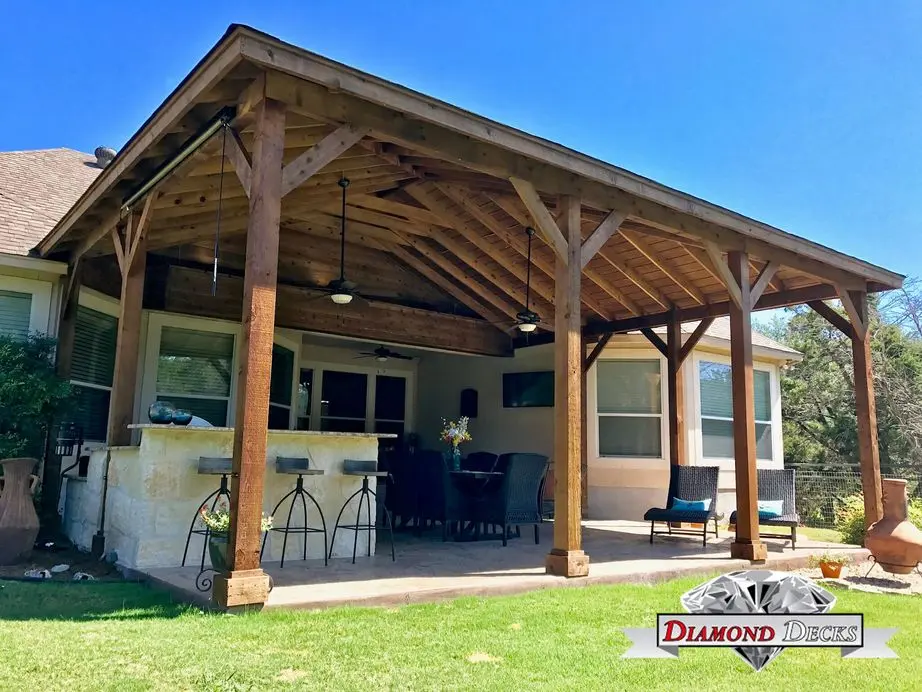
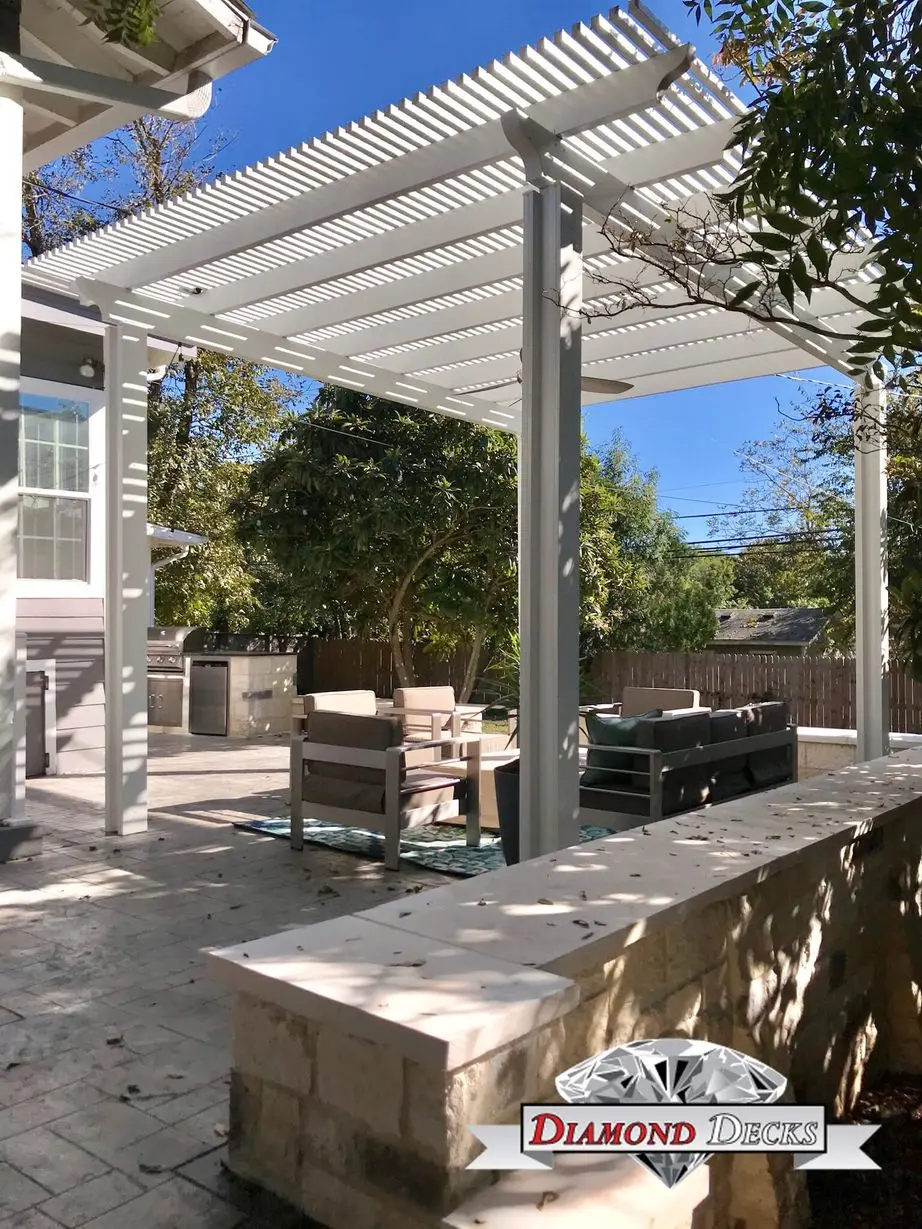
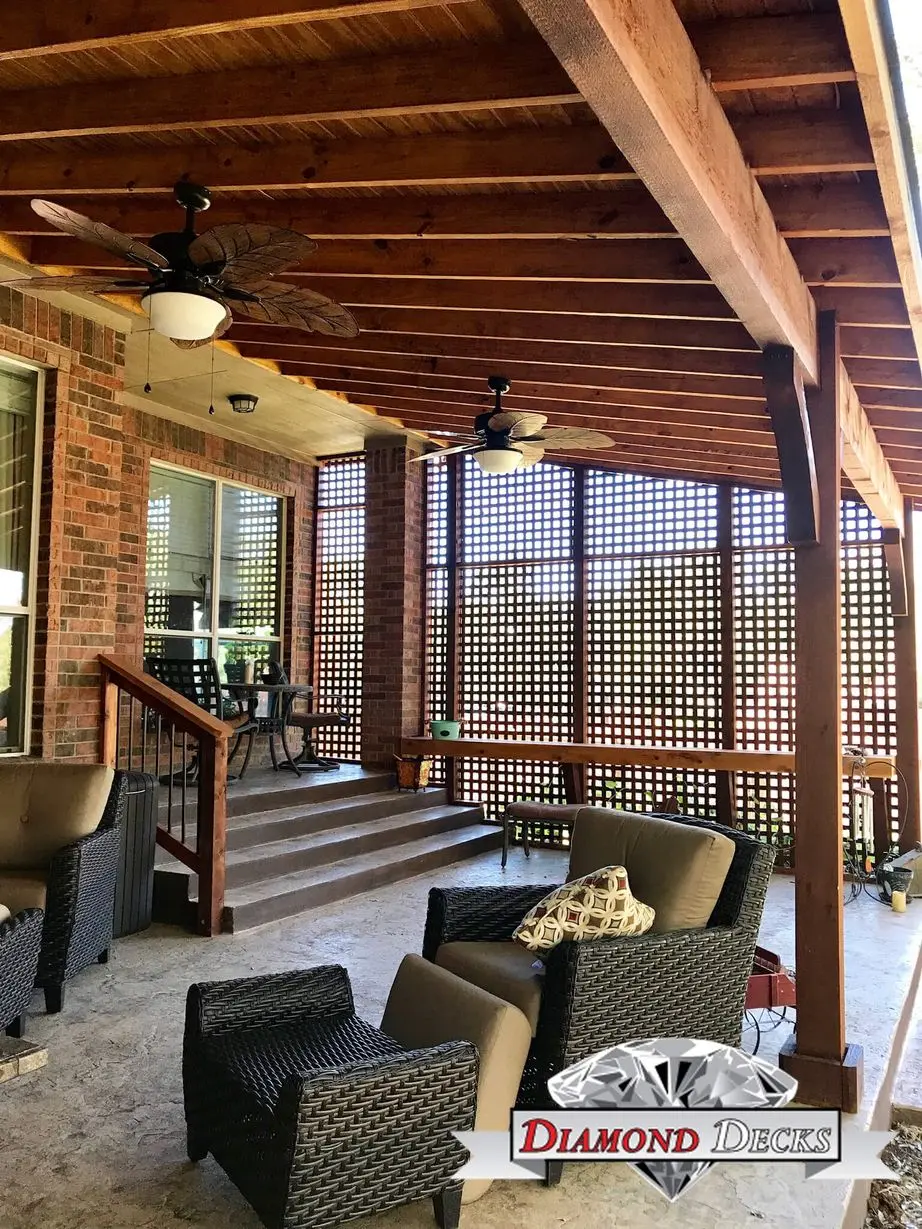
The surface you choose matters a little. Shade matters a lot. Pale surfaces of every type run cooler than dark ones, and dark concrete feels hotter underfoot than wood or light composite. Still, overhead shade from a cover or pergola beats any floor you could pick.
Other ways to take the heat off:
- A retractable awning you can lower when the sun is hottest, around 3 PM.
- Ceiling fans to keep the air moving.
- A patio mister you switch on only when you are out there.
- Screens with shades to block afternoon sun.
Find more ideas in our summer patio cooling tips, or see shade options on our patio covers in San Antonio page.